Territorial era parking mandates are adding hundreds to your rent and tens of thousands to your mortgage
Outdated government parking mandates silently inflate home prices by requiring builders to spend millions on more parking than people actually need and passing every dollar of that cost to you. These expensive mandates add up to $84,000 to your condo price and $200–$420 per month to your rent.
That's money that should be in your pocket — for gas, groceries, your kids' activities, or just whatever you want. Instead, it's going to parking that a 70-year-old law says has to exist — whether anyone uses it or not.
$84K
added to the price
of condos
Up to
$820/mo
buried in
your rent
Up to
37%
of your rent goes to
parking, not your life
The real cost
The cost breakdown: what parking mandates mean for your wallet
When expensive parking mandates drive up the cost of construction, the cost doesn't disappear. It shows up in your rent or your mortgage.
Added to condo prices
On a $425,000 condo (2019 median), that's 20% of your purchase price going to expensive government mandates, not your home.
Of rent pays for parking
Even if you don't own a car, you're subsidizing parking. A low-income renter in urban Honolulu could be spending up to 37% of their rent on parking because of expensive parking mandates.
Case Study: What expensive mandates look like in one project
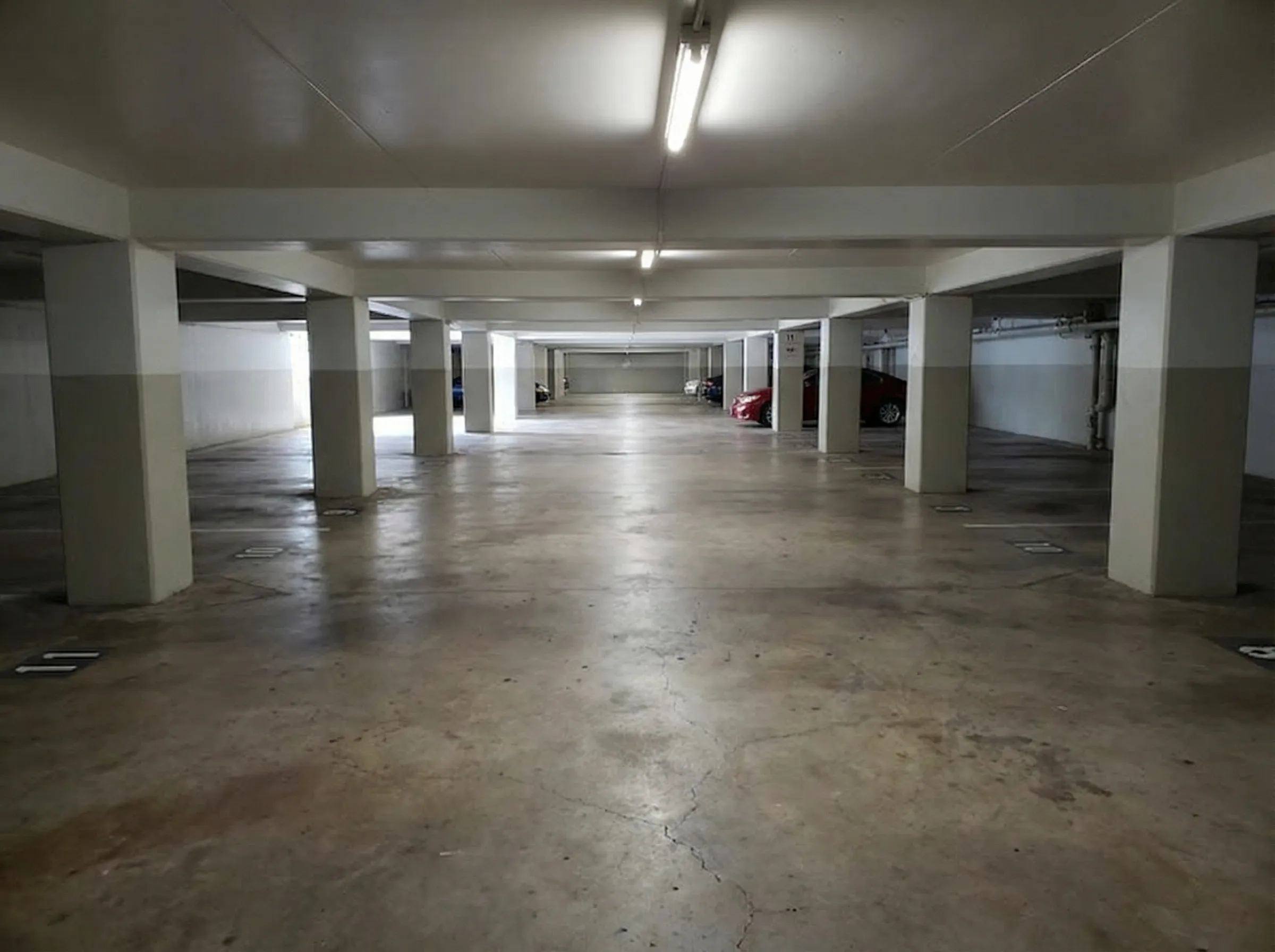
In 2018, a 56-unit Honolulu project was forced to build 40 more stalls than residents needed — $3 million in unnecessary construction. Those stalls sit empty today.
The builder didn't choose to overbuild. The government required it.
How that expensive mandate hit individual renters:
A 2-bedroom tenant rent would be $242/mo cheaper if parking wasn't overbuilt (27% of cost of parking)
A 1-bedroom tenant rent would be $151/mo cheaper if parking wasn't overbuilt (37% of parking)
The smaller your unit, the harder the mandates hit.
Every tenant in this building is paying for stalls they don't use — 2-bedroom tenants pay for 0.2 extra stalls, 1-bedroom tenants pay for 0.3 extra. That's $242/mo and $151/mo going to empty concrete.
Note: Single project example — not a market-wide average.
Parking: what you use vs. what you pay for
27% more
2-Bedroom
37% more
1-Bedroom
*Dollar amounts from a 56-unit Honolulu project.
Overbuilt percentages are based on required vs. actual parking ratios and hold across projects.
The Problem
Expensive parking mandates are the problem
Understanding the 70-year-old rules that created this crisis
Since the 1950s
Outdated and expensive rules
In the 1950s, several States and Cities passed zoning rules that forced home builders to build parking without ever determining actual demand.
The market already handles this. Home builders build what tenants want. Tenants decide what they need. But expensive parking mandates require construction spending on parking that nobody asked for — leading to underbuilt housing and overbuilt parking lots.
70+ years old
Rules from before Statehood
Bill 53 (2025)
New mandates making it worse
The solution
What happens when we get rid of expensive parking mandates?
Real Honolulu project savings
Costs go down — savings go to you
Remove the expensive mandates, and those savings flow directly to residents. For renters, it means lower monthly costs. For buyers, it means getting into a home years sooner.
More housing gets built
When expensive mandates don't eat half the development lot, that land becomes homes. More supply on the same footprint means more affordable options for Hawai'i families.
You get more housing options
Ending expensive mandates doesn't get rid of parking, it gives you housing choices. When expensive parking mandates aren't eating half the development lot, builders can create housing that fits how Hawai'i families actually live:
Right now, expensive parking mandates force every building into the same mold, regardless of who's living there. End the expensive parking mandates, and Hawai'i gets more housing types, in more locations, at more price points.
Proof it works
Honolulu already took the first step — and it worked
Bill 2 (2020) removed expensive parking mandates in urban Honolulu. Five years later, the results are clear: builders saved $10M+ per project, costs dropped for residents, and no parking crisis materialized. Builders still built parking — they just stopped overbuilding it.
$10M+
Saved per project
0
Chaos created
Massive cost savings passed to residents
No chaos or infrastructure breakdown
Builders still built parking where the market demanded it
It's working on the continent too
Cities and states across the continent saw the same results — and the research backs it up. In Beaverton, Oregon, one architect redesigned a small apartment building from 9 units to 13 after mandates were lifted. In Bellingham, Washington, the first project after reform had twice as many homes. In Buffalo and Seattle, 60–70% of new multifamily buildings used the flexibility. ECOnorthwest research found that ending expensive parking mandates alone can boost homebuilding by 40 to 70 percent.
Hawai'i's situation is unique, but the pattern holds everywhere expensive parking mandates have been removed:
Costs dropped — savings passed directly to residents
More housing got built — 40 to 70% more homes on the same footprint
Parking didn't disappear — builders still built it where people wanted it
Zero chaos — no parking shortages, no infrastructure breakdowns
Removing expensive mandates gives communities the power to choose.
Reality from Honolulu's experience, 2020–present
What you gain
What you gain when we get rid of expensive parking mandates
Select your role to see personalized benefits
For Renters
Keep more of your paycheck
Up to 37% of your rent could be reduced by getting rid of these expensive mandates — money that could be used for groceries, gas, or saving up for a home. That money should stay with you.
Want parking? You'll still be able to get it. You'll just have more types of housing available if you don't.
For Homebuyers
Unlock true affordability
Over $84K could be reduced from condo prices — that's 20% of the median unit cost. Getting rid of expensive mandates means lower purchase prices and smaller mortgages.
That $84K could be your down payment. That $820/month could be your family's groceries, gas, and savings.
For Home Builders
Build smarter, save millions
Right-size home building based on actual demand, not expensive parking mandates. Flexibility = massive cost savings passed to residents and better project economics.
Proven success
Honolulu Bill 2 (2020)
$10M saved per project
For Kupuna
Age in place affordably
Many seniors don't drive. Getting rid of expensive mandates creates affordable senior housing near bus lines and medical services.
Independence
Affordable housing near the services you need — on your terms
For Young Professionals
Live where you work
Getting rid of expensive mandates opens up affordable urban units near jobs and nightlife.
Urban living
Affordable units near jobs — without paying for parking you don't need
Common
Concerns
+ Won't this ban parking?
No. Getting rid of expensive parking mandates gives individuals and communities the ability to choose how much parking they want. Parking isn't going away. The expensive mandate is.
+ Will there still be parking?
Yes, and you'll get more housing options too. Builders build parking because tenants want it. That doesn't change. What changes is that builders can also offer housing that can't exist today — like a studio near transit for a young professional, a kupuna unit near the bus line and medical services, a family unit near schools with exactly the parking they need. Right now, the mandate forces one-size-fits-all. What changes is builders can also offer housing that doesn't exist today at prices that aren't inflated by empty stalls.
+ Will the market actually provide parking?
As recent history has shown, housing projects that don't build parking have a hard time selling their units. As long as communities want parking, it will get built. The expensive mandate just forces overbuilding beyond what people actually need.
+ What about businesses and grocery stores?
Every business in Hawai'i faces the same expensive parking mandates. When they're forced to overbuild, those costs land on you as higher prices. Groceries cost more. Medical care costs more. Getting rid of expensive mandates means businesses can right-size parking and pass savings to customers.
+ What about rental subsidies?
When a family receives a $600/month rental subsidy, $270 — almost half — goes to expensive parking mandates, not housing. That's taxpayer money going to parking when families need help staying housed. Get rid of the expensive mandate and those dollars go where they belong. They go to you.
Take Action
Ready to make a difference?
Key housing bills are moving through the 2026 legislature. Every expensive mandate we get rid of puts money back in Hawai'i families' pockets — for groceries, gas, rent, and life.
Submit testimony · Find your legislator · Stay informed